ServicesCommercial Windows
Commercial Windows in Federal Way
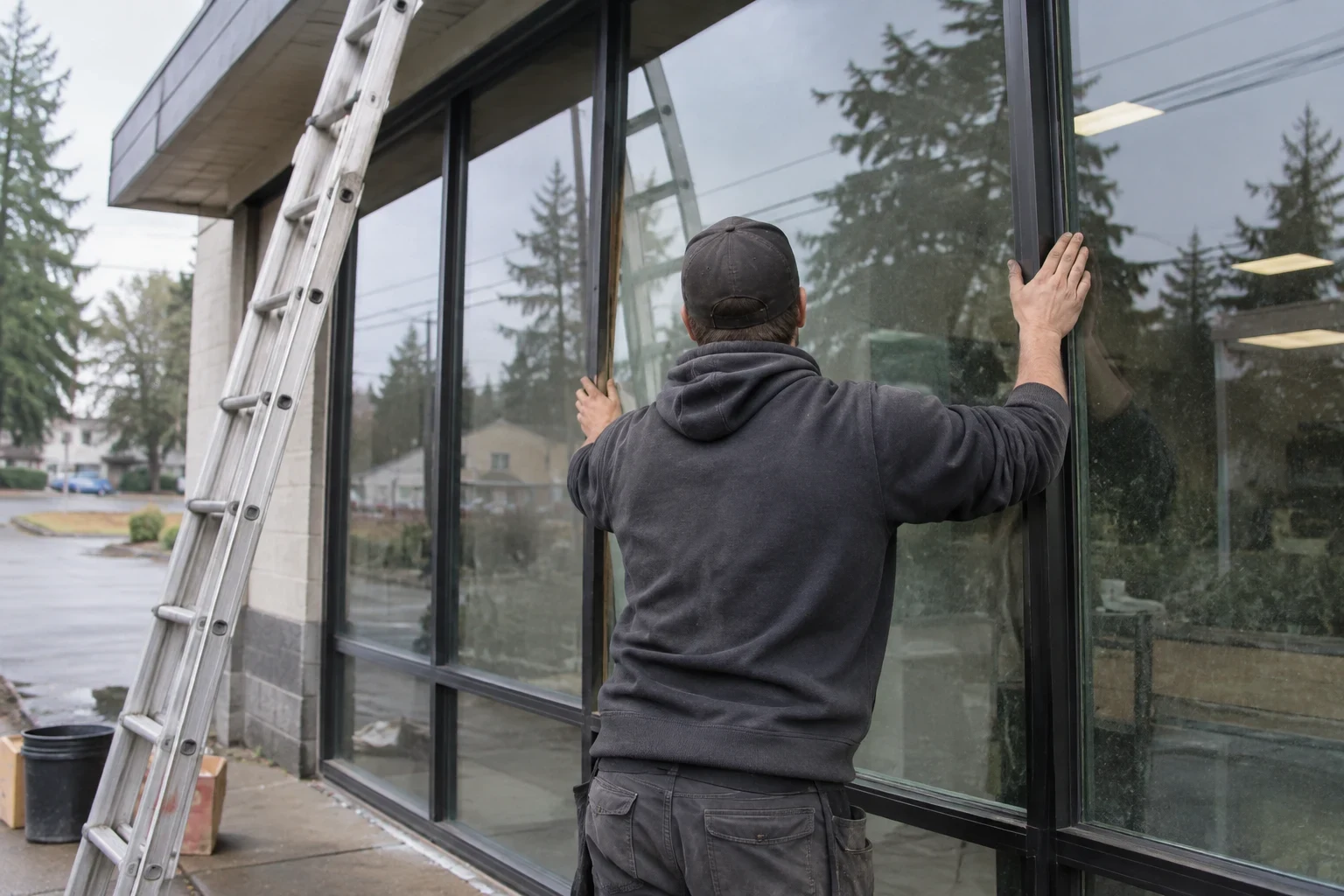
We replace and repair windows on small commercial buildings: storefronts, offices, clinics and shop spaces. We mark off the work area and handle glass with the right gear. We plan around your open hours, so staff and customers stay clear while the job gets done.
Windows for storefronts, offices and shop spaces
Commercial glass is bigger and heavier than most windows. One storefront pane can take two or three people and suction lifters to move. That changes how a job has to run, and it is why safety comes first in every plan we make.
We work on low-rise commercial buildings. That means retail fronts, small offices, medical and dental suites, and mixed-use buildings with shops on the ground floor. Common jobs are swapping fogged glass units, replacing old aluminum frames, putting in tempered or laminated glass where code calls for it, and fixing hardware on windows that open.
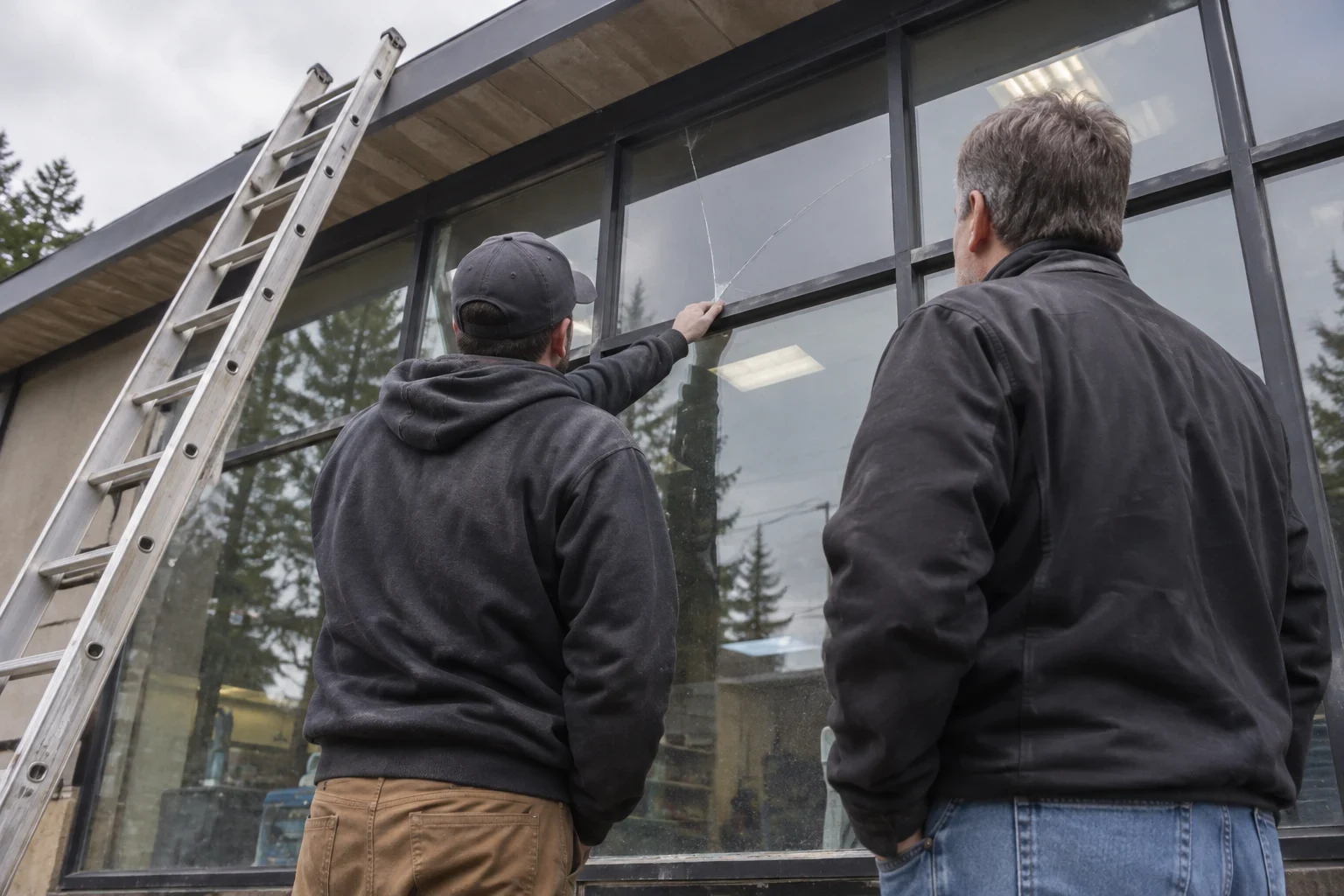
If you own or manage a building in Federal Way or a nearby town like Kent, Auburn or Des Moines, we will walk the site with you. We tell you what really needs replacing and what can be repaired, and we show you what we found before you see a price.
What the work includes
- Site walk and measurements
- We measure every opening and check frames, sills and the wall around them for rot or water damage. You get photos of what we found and a written, line-item estimate.
- Glass unit replacement
- When the seal on a double-pane unit fails, the glass fogs and stops insulating. Often the frame is still good and only the glass unit needs to go. That costs less and goes faster.
- Full frame replacement
- Old single-pane aluminum frames sweat, leak and let heat out. We pull them, check the rough opening, then set new thermally broken frames, flashed and sealed against wind-driven rain.
- Safety glass where code requires it
- Glass in or near doors, close to the floor, or in large panels often has to be tempered or laminated. We check each spot and use the right glass where it is required.
- Permits and inspection
- Many commercial window jobs need a permit and have to meet the state energy code. When one is needed, we pull it and set up the inspection.
- Cleanup
- Old frames, broken glass and sealant leave with us. We sweep inside and out and do a last check for glass chips on sidewalks and entry mats.
Signs your building's windows need work
Fog between the panes
Haze or droplets inside a double-pane unit mean the seal has failed. It will not clear up on its own.
Drafts and rising heating bills
If staff sit in coats near the glass or the heat runs all day, the windows are likely losing air and heat.
Water at the sill
Stained drywall, swollen trim or puddles after a storm point to failed sealant or flashing. Left alone, the leak reaches the framing behind it.
Cracked or chipped glass
A crack in a big pane can spread with a temperature swing or a slammed door. Until it is replaced it is a cut hazard. Tape it, keep people back, and have it checked soon.
Plain glass where safety glass belongs
Older buildings sometimes have ordinary glass in doors or sidelights. When it breaks, it falls in long, sharp pieces. Look for a small etched label in a corner; if there is none, have us check it.
Windows that stick or won't lock
A window that will not latch is a security problem. One that will not open can be a problem for airflow and getting out.
What sets the price
Commercial jobs vary a lot, because openings, glass and access differ from one building to the next. We do not give a number until we have seen the site. Your quote lists glass, frames, labor, equipment and permit costs on separate lines, and we offer flexible payment options.
Size and weight of the glass
Bigger panes cost more to make and take more people and equipment to set safely.
Type of glass
Tempered, laminated, low-E and tinted glass each add cost. Code decides some of it; the rest is your choice.
Height and access
Upper-floor windows may need a lift. Work next to a busy sidewalk can need extra barriers.
Condition behind the frame
Rotted framing or rusted anchors only show once the old frame is out. We photograph anything we find and talk with you before doing extra work.
Timing
Working after hours or on weekends to keep your doors open can change the labor cost. We go over the options with you up front.
How a commercial job runs
- 1
Free site visit
We walk the building, measure, and ask about your hours and foot traffic. You then get a free, no-pressure quote with every line spelled out.
- 2
Scheduling around your business
We aim for slower hours, early mornings or days you are closed. Glass and frames are ordered to exact size before anyone touches an opening.
- 3
Setting up a safe work zone
Before the first pane comes out, we put up cones and caution tape and cover floors and displays near the window. One person keeps customers and staff out of the work area. Large glass is moved with suction lifters, not by hand alone.
- 4
Install and seal
We only open as many windows as we can close up the same day. Each frame is set, shimmed, flashed and sealed, so your building is not left open overnight.
- 5
Walkthrough and cleanup
We test every sash and lock, clean the glass and clear all debris. If a permit was pulled, we handle the final inspection.
Questions from building owners
Can you work while we're open?
Often, yes. We mark off a work zone, keep one person watching it, and work one opening at a time. For entry glass or busy fronts, we may suggest early hours or a closed day so nobody walks through the work area.
Do we need a permit?
Many commercial window jobs do, especially full frame replacements. We check what your job needs, pull the permit when one is required, and set up the inspection. You do not have to deal with the paperwork.
Can you replace just the glass instead of the whole frame?
If the frame is solid and sealing well, yes. Swapping only the glass unit costs less and takes less time. If the frame is corroded or leaking, we will tell you plainly and show you photos.
How long does a job take?
Most installs are finished in a single day. A storefront with several large panels or a lot of hidden damage can take longer. We give you a schedule before work starts.
Is low-E or tinted glass worth it?
For glass that gets afternoon sun, it usually cuts glare and keeps the space cooler. On a shaded side, plain insulated glass may be enough. We will tell you which windows would really benefit.
Get your building's windows checked
Tell us about your building and what is going wrong. We will set up a site visit and give you a clear, line-item quote at no cost.